
One of the biggest misconceptions around fresh feeding is that there must be a fixed percentage of every ingredient.
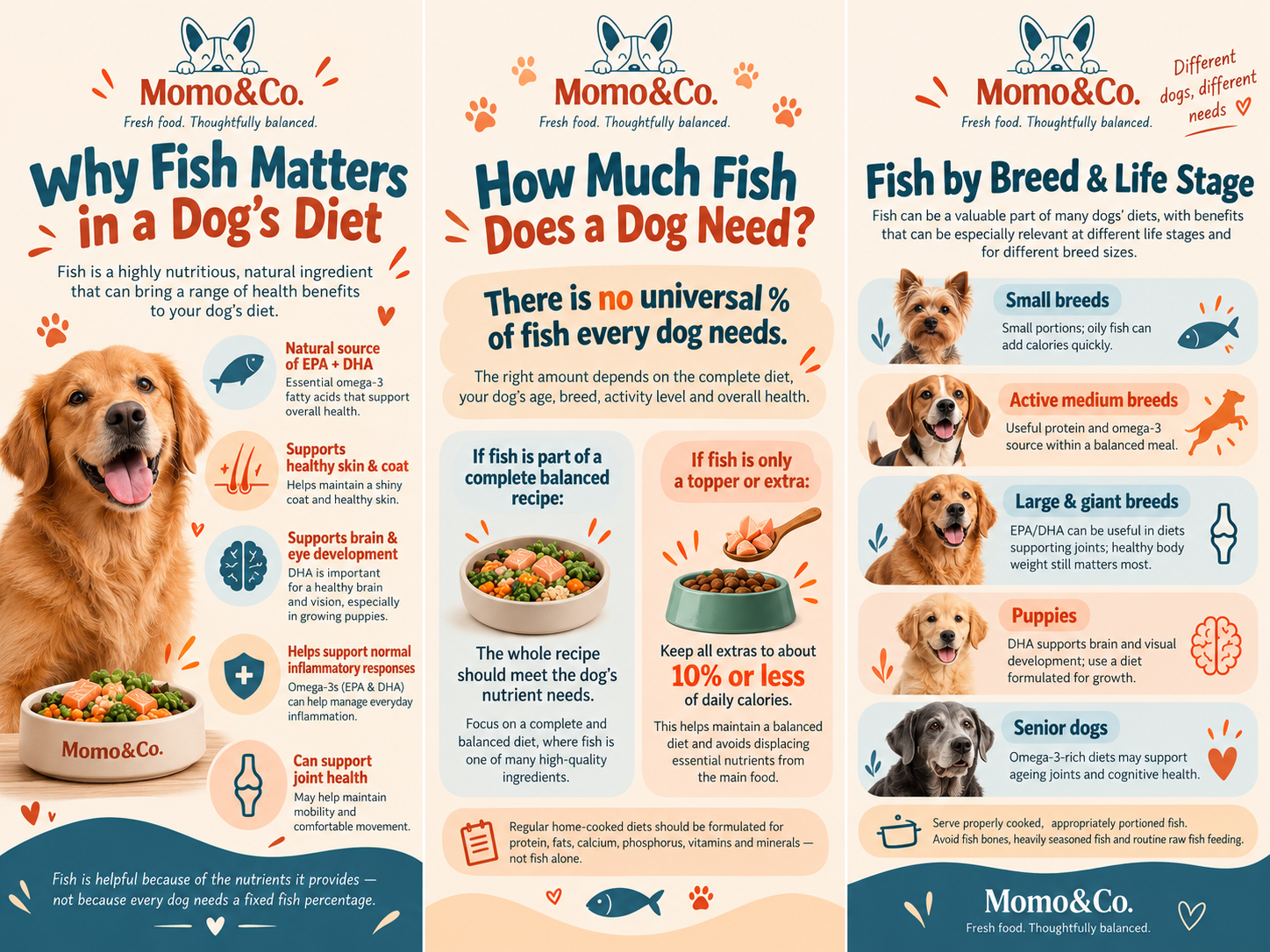
There is actually no universal percentage of fish that every dog needs.
A dog’s nutritional requirements depend on factors such as age, body weight, activity level, overall calorie intake and health. What matters is whether the entire meal is nutritionally balanced, rather than simply how much fish has been added.
If you're giving cooked fish as a topper to an already complete diet, think of it as an extra. WSAVA recommends that treats and additional foods together account for no more than around 10% of a dog’s daily calories, unless the overall diet has specifically been formulated to include them.
When fish forms part of a properly formulated fresh-food recipe, however, it can make up a larger portion because the rest of the ingredients are balanced around it.
What about different breeds?
Interestingly, fish requirements don't change dramatically simply because of breed. Size, life stage and lifestyle often matter more.
Small breeds
Dogs such as Shih Tzus, Pomeranians and smaller Indie mixes require relatively few calories. Oily fish is nutritious but calorie-dense, so portions need to be appropriate for their size.
Active and medium-sized dogs
Beagles, Spaniels, Indies and other active dogs can benefit from fish as a high-quality protein and omega-3 source within a balanced diet.
Large and giant breeds
For Labradors, Golden Retrievers, German Shepherds and giant breeds, maintaining a healthy body weight remains one of the most important things we can do for joint health. Diets containing EPA-rich omega-3s are also used nutritionally to support dogs with joint and mobility concerns.
Puppies
Fish can be especially interesting during growth because DHA plays an important role in brain and retinal development. Puppies should, however, receive a properly formulated growth diet rather than simply having extra fish added to their meals. Large and giant-breed puppies require particularly careful nutritional balance while growing.
Senior dogs
As dogs age, omega-3-rich foods may form part of a diet designed to support mobility and overall wellbeing.
The important part isn't “more fish.” It's balance.
At Momo&Co., we believe every ingredient in a bowl should have a reason for being there.
Fish can be a fantastic ingredient—but more isn’t automatically better. The goal is the right amount of protein, fats, vitamins and minerals working together for your dog.
Serve fish cooked, boneless and unseasoned, and avoid routinely feeding raw fish or fish bones.
Because a great bowl isn't built around one superfood.
It's built around balance.
Momo&Co. — Fresh food. Thoughtfully balanced.