
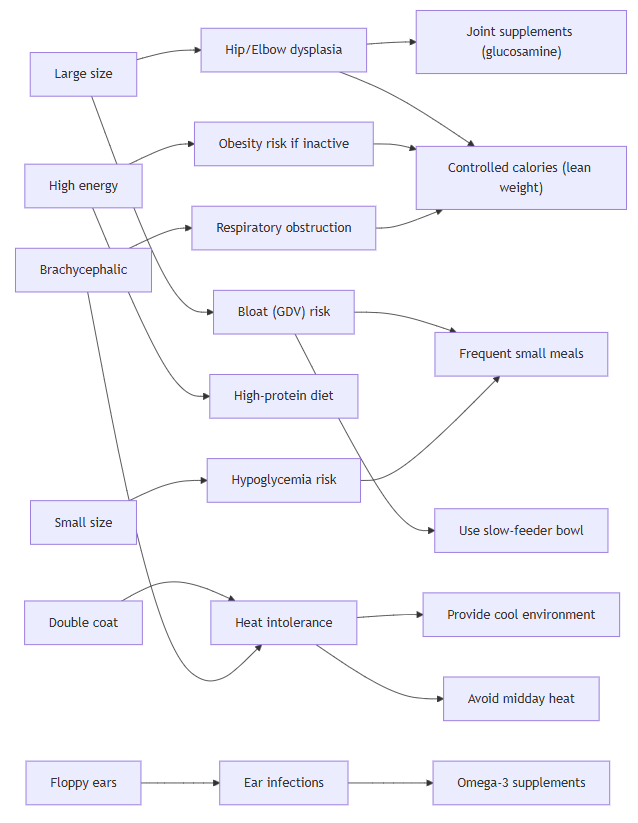
Tailored nutrition must align with each dog breed’s ancestry, build, and genetic risks. Working or large breeds (e.g. German Shepherds, Great Danes) evolved on high-protein diets and benefit from joint-support nutrients, while small breeds (e.g. Shih Tzus, Maltese) need calorie-dense, easily digestible feeds with meal frequency adjusted to avoid hypoglycemia. Indigenous breeds (e.g. Indian Pariah, Rajapalayam) thrive on simple local diets, but even they require high-quality protein to maintain lean condition. By contrast, Arctic breeds like the Siberian Husky require rich diets in cold climates, yet in India must have reduced fat and extra moisture to prevent overheating. Brachycephalic breeds (e.g. Pugs, French Bulldogs) need strict weight management and careful handling to avoid airway obstruction. Across breeds, joint dysplasia (hip/elbow) is common in giants (Labrador, Rottweiler, Saint Bernard) calling for controlled growth and glucosamine/chondroitin supplements. The table below and breed sections detail origins, typical diets, health predispositions, and evidence-based feeding plans. Our analysis draws on kennel-club standards, veterinary genetics literature, and regional Indian studies.
Methodology
We compiled data from authoritative sources: kennel club and breed club profiles, peer-reviewed veterinary genetics and nutrition journals, and breed-specific care guides (e.g. PetMD, Royal Canin). We prioritized original breed standards (Kennel Club of India, FCI), veterinary research on genetic conditions (e.g. GSD pancreatic insufficiency), and Indian studies (ICAR surveys on native dogs). Online pet-health databases and Indian pet-care sites (for local feeding practices) supplemented this evidence base.
Indian Pariah (Indie)
- Original purpose: Native village dog (guarding/hunting); often a landrace rather than a selective breed.
- Geographic origin: Ancient autochthonous dog of the Indian subcontinent (present ~4500 years).
- Historical diet: Free-ranging scavenger diet (rice, lentils, bones, milk, meat scraps).
- Health issues: Remarkably few inherited problems; genetic diseases (e.g. hip dysplasia) are extremely rare due to natural selection.
- Nutritional implications: Hardy physiology: thrives on moderate-protein home diets. Needs balanced macros (protein ~20–25%, fat ~10–12%) to maintain lean muscle. High immune fitness means no special nutrient requirements beyond normal maintenance.
- Recommendations: Feed a mixed diet with lean meats (chicken, goat, egg) plus grains/legumes. Aim for twice-daily portions with controlled calories (avoid pet obesity in kennel dogs). Joint supplements are not usually needed unless aging. Ensure fresh water and regular deworming (mange/parasite risk).
- India notes: Well-adapted to climate; street or farm dogs typically eat leftovers. As pets, Indies often get rotis or rice – be careful of overfeeding carbohydrates. Local advice: include curd or boiled eggs for calcium/protein.
Labrador Retriever
- Original purpose: Gundog and retriever of waterfowl.
- Geographic origin: Descended from Newfoundland’s St. John’s water dogs; developed in England (named after Labrador).
- Historical diet: Fishermen’s working-dog diet (fish, shellfish, meal leftovers).
- Health issues: Highly prone to obesity (often due to a POMC mutation causing hyperphagia). Also hip/elbow dysplasia and ear infections (floppy ears) are common, plus exercise-induced collapse (EIC gene) and some eye diseases (PRA, cataracts). Hypothyroidism and food allergies occur.
- Nutritional implications: Require strict weight control: excess calories worsen joint issues. A lean diet and portion control (slow feeding) are essential. Include joint-support nutrients (glucosamine/chondroitin) and Omega-3 fatty acids for coat health.
- Recommendations: Premium balanced diet with ~25–30% protein and ~12–18% fat. For a typical 30 kg adult, start around 1500–1800 kcal/day (adjust per activity). Feed twice daily, no free-feeding. Supplement fish oil (EPA/DHA) for skin and joint health. Puppies: large-breed formula to control growth.
- India notes: Very common pet. Locally often fed chawal-dal with chicken; this high-carb intake easily causes weight gain. Emphasize lean proteins (grilled/fish curry without bones) and vegetables. Provide cool water year-round (Labs pant in heat). Popular Indian brands (Royal Canin, Pedigree) have Lab-specific formulas; avoid low-quality grain-heavy feeds.
Golden Retriever
- Original purpose: Waterfowl retriever and gundog (Lord Tweedmouth’s kennels, 1800s Scotland).
- Geographic origin: United Kingdom (Scotland).
- Historical diet: Similar to Labs – fish and game scraps.
- Health issues: High incidence of cancer (hemangiosarcoma, lymphoma), hypothyroidism, and allergies. Hip dysplasia and chronic ear/skin issues are common; eye problems (cataracts/PRA) occur.
- Nutritional implications: Weight management is key (hypothyroid tendency). Diets rich in antioxidants (vitamin E/C) and Omega-3 may support immune/skin health. Joint supplements useful as Goldens age.
- Recommendations: Balanced large-breed diet (25–30% protein, moderate fat). Include EPA/DHA and taurine for heart and coat. Maintain ideal weight via measured feeding (~1300–1600 kcal/day for ~30 kg). Twice daily feeding; mental enrichment to prevent begging-for-food behavior.
- India notes: Similar to Labradors in practice. Often fed vegetarian mixes (dal-rice) with occasional chicken. Avoid excessive dairy or fried treats. A local tip: boiled chicken breast with peas and rice is a good meal. Provide shade – Goldens have dense coats and shed heavily in heat.
German Shepherd
- Original purpose: Herding and guard dog (Max von Stephanitz, 1899).
- Geographic origin: Germany.
- Historical diet: Farm dog rations (meat, bones, vegetables).
- Health issues: Very prone to hip and elbow dysplasia, as well as degenerative myelopathy. Exocrine pancreatic insufficiency (EPI) is relatively common. Deep-chested GSDs are at risk for bloat (GDV). Allergies and autoimmune issues occur.
- Nutritional implications: Large-breed puppy diet to slow growth and avoid skeletal stress. For EPI: need highly digestible, low-fiber diets with enzyme supplements. Bloat risk mandates multiple small meals and no exercise around feeding.
- Recommendations: High-quality protein (30%), moderate fat (15%) in adult diet. Feed puppy stage <12 mo on a large-breed formula (controlled Ca/P). 2 meals/day with no heavy activity before/after. Supplement fish oil (EPA/DHA) for coat and glucosamine for joints. If EPI develops, use a prescription low-residue diet with pancreatic enzymes.
- India notes: Extremely common guard dog. Often fed on cattle leftovers or rice; ensure more meat content for proper nutrition. Dehydration can aggravate digestive issues; provide constant water. Hot climate: GSDs tolerate it but should not be overly active midday. Deworm regularly (many strays eat offal).
Siberian Husky
- Original purpose: Sled dog and pack hunter (Chukchi people).
- Geographic origin: Siberia (Arctic).
- Historical diet: High-fat protein (fish, seal, reindeer).
- Health issues: Eye diseases (PRA, cataracts), hypothyroidism, and zinc-responsive dermatoses. Notably heat-sensitive (coat designed for –60°C). Occasional hip dysplasia.
- Nutritional implications: Traditionally thrive on high-fat diet, but in India require lower fat and higher water. Need ample protein for lean muscle. Zinc and B vitamins are important (skin issues). As a working breed, require nutrient-rich diet when active, but if household pet, avoid excess calories (Huskies will gain weight if inactive).
- Recommendations: Diet with ~28–35% protein and 15–20% fat. Include moisture (wet food or water with meals) to mimic snow intake. Feed 2–3 meals/day; avoid leaving food out (Huskies gorge themselves then fast). Provide Salmon oil or flaxseed for omega-3 (coat, joints). Puppy food until ~9–12 mo.
- India notes: Primary concern is heat. In cooler regions (mountains) follow standard husky diet. In cities, drastically reduce fat in summer and increase fresh vegetables (pumpkin, carrot) for fiber and hydration. Air conditioning or fans are a must. Owners report many Indian Huskies become sedentary; offset with controlled portions and playtime.
Shih Tzu
- Original purpose: Chinese royal lapdog and Tibetan sentinel.
- Geographic origin: Tibet/China.
- Historical diet: Porridge, meats, milk.
- Health issues: Severe brachycephalic airway syndrome (nasal stenosis, long soft palate), chronic eye problems (dry eye, ulcers), ear infections (long floppy ears) and dental overcrowding. Obesity is a major risk (worsens breathing, joints, diabetes). Patellar luxation and spinal issues can occur.
- Nutritional implications: Maintain strict ideal weight to ease airway and joint stress. Puppies can get hypoglycemia, so frequent feeding. Diet should be moderate in fat (avoid pancreatitis). Dental health: crunchy kibble to reduce tartar. If allergies are present, consider limited-ingredient diets.
- Recommendations: Small-breed balanced diet (~25–30% protein, ~12% fat). Puppies: 3–4 meals/day (to prevent hypoglycemia); Adults: 2 meals. Add omega-3 for coat/skin and glucosamine for joints. Brush teeth daily or use dental chews. Strictly limit treats (≤10%) and scrap food.
- India notes: Very popular as companion. Overheating is common; keep indoors in heat (often clipped). Many owners feed roti, dal, and leftovers – watch portion sizes. Avoid giving too much milk or dairy (often given to coat them shiny); moderate amounts only. A local tip: boiled egg and curd is an excellent protein snack for them.
Toy Poodle
- Original purpose: Water retriever (standard poodle ancestry), now chiefly companion.
- Geographic origin: Germany/France.
- Historical diet: Table scraps (German water dog roots).
- Health issues: Patellar luxation (kneecap), Legg-Calvé-Perthes disease (femoral head), luxating patella, and slipped trachea. Also dental disease (small mouth), PRA, Addison’s. Toy poodles can be prone to epilepsy.
- Nutritional implications: Small size -> risk of hypoglycemia if meals missed; frequent feeding in pups helps. Being small-breed, dental care (kibble helps) is important. Small body frame: avoid excessive calcium or fat to prevent orthopedic issues. Coat maintenance (curly, dense) benefits from omega-3.
- Recommendations: Toy/small-breed diet with ~28%+ protein, ~15% fat. Puppies 3-4 meals/day; adults 2 meals with precise portions to prevent weight gain. Use small-kibble form. Offer omega-3s for skin/coat and joint support. Use slow feeder or scatter feeding (puzzle toys) to reduce gulping (protect trachea).
- India notes: Common indoor pet. Fur grooming frequent (haircuts). Carpet training is needed if accidents occur. Many owners over-treat these dogs; stick to measured feeds. In Chennai/Mumbai heat, trim coat and provide fans.
Beagle
- Original purpose: English scent hound (rabbit/hare hunting in packs).
- Geographic origin: England.
- Historical diet: Meat and offal, village scraps during hunts.
- Health issues: Obesity is very common (beagles will eat anything). Also prone to epilepsy, hypothyroidism, hip dysplasia (mild), and ear/skin allergies. Cherry eye and IVDD occasionally seen. They often swallow non-food items (pica), causing GI issues.
- Nutritional implications: Calorie control is paramount. Use slow feeders to prevent gulping and vomiting (they vomit repeatedly if obstructed). High-fiber diets help them feel full. Sensitive GI: moderate fat to avoid pancreatitis. Skin/ear issues suggest possible food allergies – consider novel-protein diets if needed.
- Recommendations: Balanced diet ~22% protein, ~10–12% fat. Feed 2 meals/day (puppies 3-4 meals). Monitor body condition (beagles easily overeat). Limit treats (≤10%). Provide Omega-3 (fish oil) for coat and anti-inflammatory benefits.
- India notes: Many beagles are family pets. Owners commonly feed rice/dal/chicken – while partly acceptable, the quantity must be controlled. Exercise (walks/play) is crucial to burn energy, especially in small Indian yards. A trick: use manual workout games (fetch) or swimming (if near water) to tire them safely.
Pug
- Original purpose: Chinese imperial lapdog (Han/Tang dynasties); later English pet.
- Geographic origin: China.
- Historical diet: Deluxe scraps (soups, grains, tofu).
- Health issues: Pronounced brachycephaly: brachycephalic airway syndrome (narrow nostrils, elongated palate) leading to labored breathing, noisy panting, and heat intolerance. Skin fold dermatitis in facial wrinkles, eye ulcers, and retinal pigment changes. Very high obesity rates (64% had hip dysplasia in one study). Other issues: patellar luxation, hemivertebrae (spinal curvature), and rare necrotizing meningoencephalitis.
- Nutritional implications: Strict weight control to ease breathing and joint strain. Diet must be low in fat, high in fiber, with lean protein. Rapid eating and exercise after meals can provoke reverse sneezing/vomiting; slow feeding helps. Regular fresh water or moist food prevents constipation from brachycephalic tendency.
- Recommendations: Maintain lean body (BCS ≤5/9). Feed 2 small meals daily of low-fat diet (fat ≤12%), ~25% protein. Use measured feeding (no self-feeders). Include fiber (e.g. pumpkin) for satiety, and ensure chew-friendly kibble for oral health. No high-calorie treats or table scraps. Supplement omega-3 for joint/skin support.
- India notes: Very sensitive to heat/humidity; must have air-conditioning or fans. Local custom of feeding milk/curd should be limited (high lactose can cause diarrhea). Avoid spicy local dishes (pungent spices strain digestion). Many owners use baby formula or special liquid feeds when pugs refuse food; this is common but should be nutritionally balanced.
Rottweiler
- Original purpose: Roman cattle drover dog and cart-puller; then guard dog.
- Geographic origin: Germany (Rottweil region).
- Historical diet: Butcher’s offal (raw meat and blood) – very high-protein regimen.
- Health issues: Prone to hip/elbow dysplasia, osteosarcoma (bone cancer), and subaortic stenosis (congenital heart defect). Can suffer from bloat (GDV) and cruciate (CCL) tears.
- Nutritional implications: Must moderate growth with large-breed puppy formula (to protect joints). Bloat risk: limit single large meals, avoid exercise around feeding. Require extra joint support (glucosamine) as they age. Historically high meat-intake, so adequate protein (~28–30%) is beneficial.
- Recommendations: Large-breed diet (~26% protein, ~15% fat). Puppies: 3–4 meals/day transitioning to 2 meals. Feed with elevated bowls cautiously (some discourage for GDV). Include EPA/DHA (fish oil) for heart and joints. Restrict calcium supplements (diet should provide necessary Ca/P).
- India notes: Many Rottweilers guard outdoors; some owners underfeed them (feeding mostly roti) – ensure added protein (eggs, chicken). Others overfeed treats; obesity must be avoided. They are tolerant of Indian heat (short coat) but need shade. Beware of feeding cooked chicken bones (common here) – unsplit raw bones (e.g. buffalo rib) are safer for their teeth.
Doberman
- Original purpose: Ideal police/guard dog (Kuno von Dobermann, 1890s).
- Geographic origin: Germany.
- Diet: Historical: scrap meat.
- Health issues: Highly predisposed to dilated cardiomyopathy (DCM) (lethal heart disease), and von Willebrand’s bleeding disorder. Also Wobbler’s (neck/spinal compression), hypothyroidism, and hip dysplasia.
- Nutritional implications: DCM is mostly genetic, but saturated fats should be minimized and antioxidants supported (some owners add taurine, carnitine). Keep lean (obesity worsens heart workload). Use large-breed diet in puppy stage.
- Recommendations: High-quality diet (~28–30% protein, ~15% fat). 2–3 meals/day. Provide Omega-3 (fish oil) for heart and skin. Some advise moderate sodium restriction if heart disease is present. Monitor BCS strictly (lean but not underweight). Avoid rapid growth enhancers.
- India notes: In hot weather, restrict exercise – poor thermoregulator. Indian Dobermans often get offal (liver, off-cuts), which is fine in moderation. Teach not to jump high (due to spinal issues) – use ramps in homes. Access to cool resting spots is key.
Boxer
- Original purpose: Boar and bear baiting dog; later companion.
- Geographic origin: Germany.
- Diet: Historically meat from hunts.
- Health issues: Very prone to arrhythmogenic right ventricular cardiomyopathy (ARVC) – fatal heart arrhythmias. Also hip dysplasia, bloat, and common cancers (mast cell tumors, lymphoma). Hypothyroidism and degenerative knee issues are noted.
- Nutritional implications: Like Dobermans, keep lean (overweight worsens heart/back). Fish oil is especially useful for cardiac and skin health.
- Recommendations: Balanced diet with ~30% protein, ~15% fat. Feed 2 meals/day. Puppies: 3–4 meals. Provide slow feeder to reduce GDV risk. Include Omega-3 supplements (EPA/DHA) for heart and anti-inflammatory support.
- India notes: Many Boxers kept as pets; emphasize exercise (Agility or jogging) to use energy. In monsoon, check for fungal infections (Boxers get yeast in folds); diet rich in omega-3 can help skin tolerance. Boxers often fed eggs and curd here, which is acceptable but avoid too much starch (barley/wheat).
Dachshund
- Original purpose: Badger-digging hound.
- Geographic origin: Germany.
- Diet: Meat and offal, burrowed prey.
- Health issues: Exquisite risk of intervertebral disc disease (IVDD); even 10% overweight greatly increases this risk. Also prone to patella luxation and hypothyroidism. Diabetes in obese dachshunds.
- Nutritional implications: Weight control is paramount. A lean body markedly reduces IVDD risk. Balanced calcium (not excessive) is needed during growth. Fiber is helpful for satiety.
- Recommendations: Low-calorie, high-fiber diet (~25% protein, 10% fat). Feed measured portions (adults 2x/day). Use raised feeder to minimize bending, and a harness when walking (protect spine). Avoid table scraps (esp. desserts).
- India notes: Indoor pets often become plump from leftovers – owners should use small-cup measurements. Ramp or step training is crucial to prevent jumping. Some Indian dog foods use jowar/millet – these are fine for calories if balanced with protein.
Cocker Spaniel
- Original purpose: Flushing woodcock and other birds.
- Geographic origin: United Kingdom.
- Diet: Game meat and general dog feed.
- Health issues: Chronic ear infections (floppy ear canals), skin infections (coat mats), hip dysplasia (medium-breed), and von Willebrand’s bleeding disorder. Also common: progressive retinal atrophy, autoimmune issues.
- Nutritional implications: Support skin/coat health with fatty acids. Control weight (especially in show-lines which are less active). Ear/skin prone, so diet may need to manage allergies or yeast (limited-ingredient diet if needed).
- Recommendations: Adult diet ~25% protein, ~12% fat. Feed 2 meals/day. Brush and clean ears after baths. Offering fish oil promotes a healthy coat. If allergic, switch proteins. Antioxidants (vit E) may help skin.
- India notes: Cockers often live in humid areas (e.g. Kerala); full grooming is needed to prevent mats. Many owners feed wet cottage cheese/egg to Cockers; this is protein-rich but should be balanced with kibble to ensure nutrients.
Lhasa Apso
- Original purpose: Tibetan monastery watchdog.
- Geographic origin: Tibet.
- Diet: Monks’ leftovers (yak meat, barley).
- Health issues: Brachycephalic airway syndrome (flat face: breathing difficulties, heat-stroke risk), eye conditions (PRA, cataracts, glaucoma), patellar luxation, renal dysplasia (rare kidney defect). Often hypothyroid. Dental tartar (small jaws).
- Nutritional implications: Keep slim to ease airway and back strain. Dental care is key (dry kibble). If renal issues present, needs prescription diet. Otherwise a balanced mini-dog diet works.
- Recommendations: Small-breed diet (~25% protein, 10% fat). Puppies: 3 meals/day; Adults: 2 meals. Brush teeth regularly. Provide Omega-3 for coat (thick in original climate) and joint health.
- India notes: In tropics, coat must be trimmed for comfort (many keep “puppy cut”). Because many owners leash-walk them, avoid long walks in heat. Feed moderate mutton/chicken; rice with them is fine but not too much.
Pomeranian/Indian Spitz
- Original purpose: Companion lapdog (also small watchdog for Spitz).
- Geographic origin: Pomerania (Poland/Germany) / indigenous Indian breeds.
- Diet: Small portions of human food or commercial kibble.
- Health issues: Luxating patella, collapsing trachea, dental overcrowding, hypoglycemia in pups, and coat problems (alopecia X in Poms).
- Nutritional implications: Calorie-dense for high metabolism, but watch for obesity (even tiny weight gain hurts small dogs). Kibble size should be small. Provide fiber for satiety. For luxation, add glucosamine.
- Recommendations: Toy-dog diet (30% protein, 15% fat). Puppies: 3-4 small meals; Adults: 2 meals. Include dental chews or dry kibble to reduce tartar. Add Omega-3 for skin/coat.
- India notes: Indian Spitz (the larger variety) is more heat-tolerant. Pomeranians (often white-coated in India) are usually indoor. Many are fed boiled rice or poha – supplement with meat/vegetables. Ensure potable water (toy breeds drink little and dehydrate easily).
Great Dane
- Original purpose: Boar hunting and estate guard dog (“Apollo of dogs”).
- Geographic origin: Germany.
- Diet: Historically large-amounts of meat.
- Health issues: Very high bloat (GDV) risk (deep chest). Hip dysplasia, Wobbler’s (cervical spine), degenerative myelopathy (back paralysis), and dilated cardiomyopathy (DCM). Short lifespan (7–10 yr).
- Nutritional implications: Feed a giant-breed diet (controlled Ca/P and energy) to slow skeletal growth. Prevent bloat: small meals, pre-spayed gastropexy if possible. Weight control is critical to reduce spinal load and heart stress.
- Recommendations: Large/giant-breed puppy formula up to 18 mo. 3–4 meals/day as puppy; adult 2 meals. Supplement glucosamine and fish oil. Avoid soybean/hydraulic ingredients (some link to DCM).
- India notes: Very rare. Heat is major issue: keep indoors with AC, shave coat if necessary. Giants drool; cover floors for hygiene (diet often rich). Because lifetime is short, owners should use high-grade kibble or boil lean meats with vegetables.
Saint Bernard
- Original purpose: Alpine rescue dog (Swiss hospice of Great St Bernard).
- Geographic origin: Swiss Alps.
- Diet: Mountain diet (porridge, meat, wine).
- Health issues: Bloat/GDV (deep chest), hip dysplasia, and osteosarcoma (bone cancer). Also eyelid problems (entropion) and heart disease.
- Nutritional implications: Similar to Danes: giant-breed diet, many small meals, joint supplementation, prevent obesity.
- Recommendations: Feed 2 meals/day of balanced giant-breed diet. Add fish oil and glucosamine. Puppies on prescribed formula to avoid too-rapid growth.
- India notes: Even rarer. In Indian summers, treat like a Great Dane: avoid over-exertion. They drool and shed; diet doesn’t change much, but owners often feed boiled milk/rice – supplement protein (lean meat) to meet needs.
Rajapalayam
- Original purpose: Royal boar-hunting dog and farm guard.
- Geographic origin: Tamil Nadu, India.
- Historical diet: Surveyed dogs ate twice daily – typically milk, rice, egg and meat. Rich in protein and calories.
- Health issues: Generally very healthy; no significant breed disorders. (White coat/blue eyes can lead to deafness in ~30%.)
- Nutritional implications: Lean, muscular frame: requires higher protein (~30%) to maintain muscle. Traditional high-carb (rice) is supplemented with protein (egg, meat). Calcium is important for their robust build.
- Recommendations: Follow traditional pattern: morning milk+egg+ragi/rice; evening meat (chicken/mutton). Include vegetables. Provide calcium (eggshell powder or bone meal).
- India notes: Well-adapted to heat and activity. As working dogs, they often get locally available feed (paddy, river fish). Owners may add neem or curd for coat/skin health. Avoid overfeeding in non-working pets (lean condition is desirable).
Mudhol Hound
- Original purpose: Gazelle and boar hunting sighthound.
- Geographic origin: Karnataka, India.
- Diet: Traditionally millet and small game or goat meat.
- Health issues: Very hardy; no major genetic issues reported. Seasonal alopecia reported on coats.
- Nutritional implications: Very lean: high-protein, low-fat (like Greyhounds). Excess calories lead to obesity (rarely seen, but prudent to avoid).
- Recommendations: Provide lean meat (mutton, chicken) with moderate millet. Two meals/day. Include green vegetables for fiber. Supplement mineral/vitamin mix occasionally (goat’s milk is traditional in some kennels).
Kombai
- Original purpose: Boar hunting dog.
- Geographic origin: Tamil Nadu, India.
- Diet: Village diet – often chicken, goat, and farm grains.
- Health issues: No well-known inherited problems; very muscular and endurance-oriented.
- Nutritional implications: Lean diet rich in protein (meat with some rice). Avoid fattening feeds (they should remain athletic).
- Recommendations: Similar to Rajapalayam: daily meat (goat/chicken) and rice. Ensure adequate vitamins/minerals (sometimes given liver or curd).
Chippiparai
- Original purpose: Hare and rat hunting sighthound.
- Geographic origin: Tamil Nadu, India.
- Diet: Meat-based local diet (small wild game, village fowl).
- Health issues: Very hardy; some may develop hip dysplasia if overfed.
- Nutritional implications: High-protein, low-fat (very active breed). Traditional diets (fish and rice) suffice.
- Recommendations: Twice-daily feeding: boiled meat or fish with millet/rice. Carrots/spinach are fed sometimes by owners for nutrients.
Maltese
- Original purpose: Companion dog of Mediterranean nobility.
- Geographic origin: Malta (Mediterranean).
- Diet: Long history of pampered feeding (porridge, meats).
- Health issues: Patent ductus arteriosus (PDA) heart defects, liver shunts (portosystemic), luxating patella, and dental disease. White shaker syndrome, UTI common.
- Nutritional implications: If heart/shunt present, may need prescription diet (low sodium/protein). Otherwise treat as small toy dog: sensitive to weight gain.
- Recommendations: Toy-breed diet (25–30% protein, ~12% fat). Puppies: 3–4 meals (to prevent hypoglycemia); adults 2 meals. Avoid overfeeding (prone to obesity). Provide Omega-3 (fish oil) for skin/coat and joints. Daily dental care.
- India notes: Coated breed – usually trimmed for comfort here. Many are fed boiled chicken and rice; ensure balanced nutrients. Indoors, watch weight carefully (toy dogs easily become pudgy).
French Bulldog
- Original purpose: Companion dog (mini bulldog).
- Geographic origin: France.
- Diet: Human leftovers (pâté, kibble).
- Health issues: Classic brachycephalic syndrome (BOAS) – stenotic nares, elongated palate, narrow trachea. Heatstroke-prone. Skin allergies (facial folds), ear infections, and intervertebral disc disease (lordosis) especially if obese. Many are C-section-born (pelvic shape).
- Nutritional implications: Weight control is critical (excess shortens lifespan and worsens BOAS). Allergen-free diet may be needed for skin/ear issues.
- Recommendations: Premium small-breed diet (20–23% protein, ~12% fat). Feed 2 meals/day; puppies 3–4 meals. Use a slow feeder or hand-feed to prevent regurgitation. Provide 10–15% of diet as fresh veggies for fiber. Add Omega-3 (EPA/DHA) for skin/coat.
- India notes: Extremely heat-sensitive – keep indoors with AC. Indians often hand-feed treats (samosas, sweets) – avoid these. Provide cool mats, do short walks at dawn/dusk. Rice and dal (staple feeds) should be minimized due to weight gain risk.
Border Collie
- Original purpose: High-energy herding dog.
- Geographic origin: Anglo-Scottish border.
- Diet: Pastoral diet (meat, oats, vegetables).
- Health issues: Generally healthy. Some hip dysplasia exists. Prone to idiopathic epilepsy and Collie Eye Anomaly (genetic). Also carries MDR1 mutation (drug sensitivity) and a rare immune disorder (TNS).
- Nutritional implications: Extremely active; requires high-calorie intake. Needs premium protein and complex carbs (glycogen for herding work). Grain-free diets are not recommended (some Collies developed DCM on grain-free).
- Recommendations: Active-dog diet (30–35% protein, 15% fat). Feed multiple meals or free-choice if working hard; always ensure fiber (rice, barley) and hydration. Add joint supplements if aging. Monitor for weight gain in less-active pets.
- India notes: Rare as actual herders here; more often pets or sports dogs. Must get daily vigorous exercise. Indian owners sometimes use lentils/vegetables (e.g. spinach) in kibble to boost fiber. In shops, quality corn-free diets are emerging, which suit Collies.
India-Context Highlights
- Indian Pariah: These dogs typically scavenge or are fed kitchen scraps (rice, pulses, bones). Hardy physiology means they handle heat/water scarcity well. In practice, emphasis is on clean water and occasional protein supplements (egg, milk) rather than special commercial diets.
- Siberian Husky: An Arctic breed, Huskies struggle with India’s climate. In hot regions, diets should lower fat and increase moisture. Exercise must be in cool hours. In cooler hill stations, owners may use richer, high-fat feeds as in temperate climates, but most adjust to cooler, less-fat diet year-round.
- Rajapalayam: Being native, these dogs are already heat-adapted and often eat local staples (rice, millet, goat). Owners traditionally feed milk, egg and rice, which supports their active style. As companion dogs (with less hunting), they still need higher protein than typical pet diets.
- French Bulldog: Brachycephaly + tropical climate is a bad mix. Frenchies in India need strict light diets (to avoid airway collapse) and constant cooling. Unlike in temperate zones where they get wheat-based kibbles, Indian owners often give greasy foods; we advise leaner, easily digestible foods and ample water.
- Great Dane: Very large and short-coated, Danes suffer more in India’s heat. Feeding may include cool-water gels or soaked kibble to increase hydration. Owners should emphasize keeping these dogs very lean to reduce joint/heart strain (overweight Danes heat up faster). Space constraints (low ceilings) mean avoiding raised bowls (they already struggle to breathe).
Key Sources
- Kennel Club and breed club standards (e.g. Kennel Club of India, ABCA).
- Peer-reviewed veterinary genetics and nutrition literature.
- Breed-specific veterinary resources (PetMD: GSD, Golden Retriever, Boxer, etc.).
- Nutrition guidelines (NRC Dog Nutrient Requirements) and commercial diet references (Royal Canin Labrador/Golden).
- Indian veterinary sources (ICAR dog studies) and media on native dogs.
- Indian pet-care articles and blogs (e.g. GoofyTails breed diets).